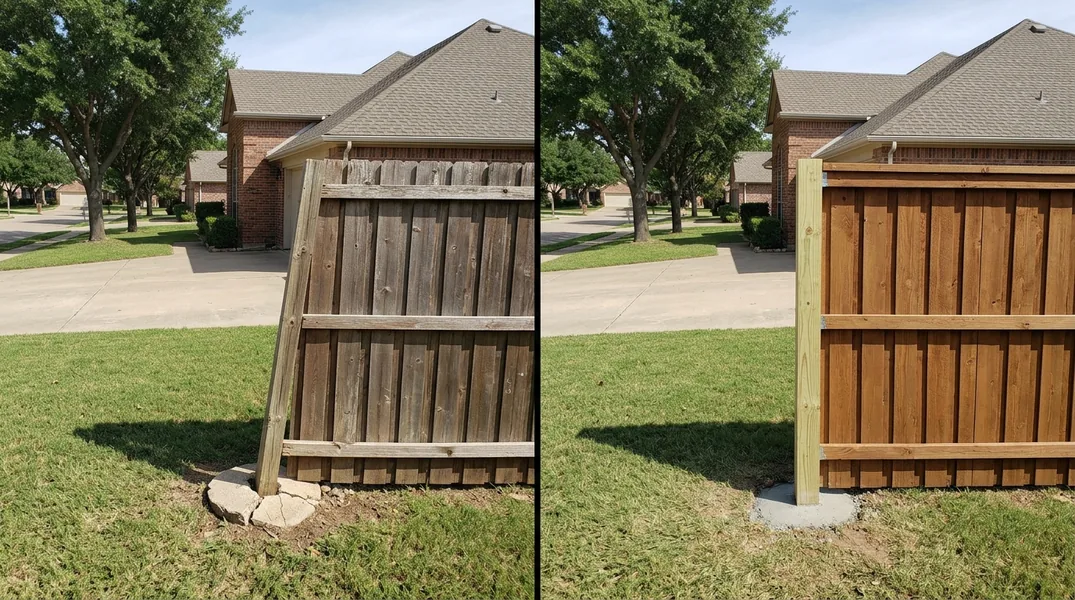
The Blackland Clay Problem: Why Arlington Fences Lean
If you own a home in Arlington, you've probably noticed something peculiar about fences in your neighborhood. Many of them lean, tilt, or appear to shift over time, even when they were installed perfectly straight just a few years ago. The culprit isn't poor installation or cheap materials, though those can certainly make things worse. The real problem lies beneath the surface, literally: the expansive blackland clay that dominates the soil throughout the Arlington area.
Blackland clay is a highly expansive soil type that swells dramatically when it absorbs moisture and shrinks when it dries out. During rainy seasons, this clay expands, pushing against fence posts with tremendous force. When drought conditions arrive, the clay contracts, leaving voids around the post base and allowing the entire post to shift or settle unevenly. This constant cycle of expansion and contraction creates stress on fence posts that simply cannot be overcome by standard installation methods alone. Over months and years, even the sturdiest fence post will begin to lean, tilt, or become unstable as the soil beneath it moves.
How Soil Movement Damages Fence Posts
Understanding the mechanics of fence post failure in clay soil helps explain why Wood & Privacy Fence Installation in Arlington requires special attention to foundation depth and materials. When clay soil expands, it doesn't push evenly on all sides of a fence post. Instead, it creates lateral pressure that forces the post to tilt in one direction. The post base may lift slightly or settle unevenly, breaking the seal between the concrete footing and the post itself. This allows water to seep into the wood, accelerating rot and decay while also destabilizing the post further.
The problem compounds over time. A post that has begun to lean becomes structurally compromised because it no longer bears weight vertically. The fence panels attached to a leaning post experience uneven stress, causing sagging, warping, or cracking. If the post is wooden, the lean often exposes more of the grain to weather and moisture, speeding up deterioration. Eventually, homeowners face a choice: repair the individual post or replace the entire section of fence. Many people don't realize that a leaning fence post is a symptom of a larger foundation problem, not just a cosmetic issue.
Leaning Fence Repair Near Me: When to Call a Professional
The first sign of a leaning fence is usually a visual one, but by the time you notice the tilt, the underlying problem has often been developing for months. If your fence is leaning more than a quarter inch per foot of height, or if you can see visible gaps between the post and the soil, it's time to call for professional help. Attempting a DIY fix by simply adding more concrete around the base rarely works because it doesn't address the soil expansion issue. In fact, many homeowners who try to straighten a post themselves end up damaging the fence structure or making the problem worse.
Arlington Fence Company specializes in diagnosing and fixing leaning fence problems caused by clay soil conditions. Our team evaluates the extent of the damage, determines whether the post can be salvaged or needs replacement, and recommends the best solution for your specific situation. We've handled hundreds of leaning fence repairs in Arlington, and we understand how blackland clay behaves throughout the year. If you're noticing a lean in your fence, don't wait until it fails completely. Contact us at (682) 277-0410 to schedule a free estimate and get a professional assessment of your fence condition.
Fence Post Replacement: The Permanent Solution
When a fence post has leaned significantly or shows signs of rot and structural failure, replacement is often the most reliable solution. Fence post replacement involves carefully removing the damaged post, preparing the hole properly, and installing a new post using techniques that account for clay soil movement. This isn't a simple dig-and-replace job. The old concrete footing must be removed or broken up, the hole must be inspected for proper drainage, and the new post must be set at the correct depth with a concrete mixture that provides stability without trapping moisture.
Arlington Fence Company uses pressure-treated lumber or concrete posts for replacements, depending on your fence type and preferences. Concrete posts are increasingly popular in clay soil areas because they resist the shifting and settling that affects wood posts. However, the installation method matters just as much as the material. We ensure proper post depth, adequate concrete coverage, and appropriate drainage around the base. For wooden posts, we apply additional sealant to the base and use concrete that slopes away from the post to shed water. Each replacement is done with the understanding that Arlington's soil conditions will continue to shift, so we build in stability measures that anticipate this movement.
Fence Post Repair: When Straightening Makes Sense
Not every leaning fence post requires full replacement. If the post is structurally sound, hasn't rotted, and the lean is relatively minor (less than half an inch per foot), a repair approach might be appropriate. Fence post repair typically involves excavating around the base of the post, installing additional bracing or support, adjusting the post back to vertical, and reinforcing the concrete footing with new material. This approach is less expensive than replacement and can extend the life of a post by several years, especially if the post is relatively new and the damage is primarily due to soil movement rather than decay.
However, repair success depends heavily on the underlying cause and the current condition of the post. A post that is leaning due to soil expansion but is otherwise sound may respond well to repair. A post that is leaning and also showing signs of rot, splitting, or wood damage is a better candidate for replacement. Arlington Fence Company evaluates each situation individually and provides honest recommendations about whether repair or replacement makes the most sense for your budget and long-term fence performance. We'll explain the trade-offs so you can make an informed decision about how to proceed.
Preventing Future Leaning: Installation Best Practices for Clay Soil
The best way to deal with leaning fences is to prevent the problem from occurring in the first place. If you're planning new Wood & Privacy Fence Installation in Arlington, or if you're replacing an entire fence, proper installation techniques tailored to blackland clay are essential. Posts should be set deeper than standard recommendations, typically 3 to 4 feet below grade depending on fence height, to anchor them below the active soil expansion zone. Concrete footings should be larger in diameter and should include proper slope and drainage features to shed water away from the post base.
Many professional fence installers in other regions don't fully account for clay soil expansion because they work in areas with different soil types. Arlington Fence Company's experience with local soil conditions means we build fences that stay straight and stable for decades. We use concrete mixtures, post materials, and installation depths specifically chosen for the Arlington environment. If you're considering a new fence project, we encourage you to discuss soil conditions and clay-resistant installation methods during your initial consultation. Investing in proper installation now prevents expensive repairs and replacements down the road.
Looking for a professional fence contractor in Arlington? Arlington Fence Company responds fast for all your fence needs.
Get a Free Quote