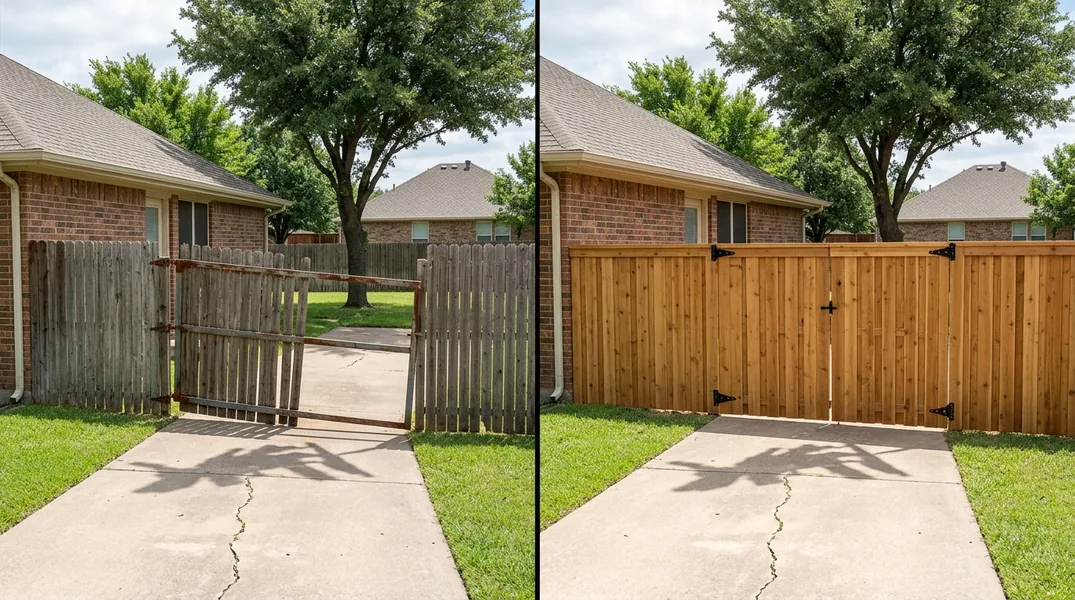
Understanding Fence Post Depth and North Texas Clay
When you're planning a Wood & Privacy Fence Installation in Arlington, one of the most critical decisions you'll make isn't about the fence style or material, it's about how deep those posts go into the ground. Most homeowners assume a standard depth applies everywhere, but North Texas presents unique challenges that demand a closer look at soil composition and climate.
The rule of thumb for fence posts nationwide is typically one-third of the post's above-ground height, which usually translates to 24 to 30 inches deep. However, Arlington sits in the heart of Texas's expansive clay region, where this standard recommendation falls short. Expansive clay, also called vertisol, swells when wet and shrinks when dry, creating tremendous pressure on fence posts. This natural movement is why many homeowners in the area discover their fences leaning, sagging, or failing within just a few years of installation. Understanding why 36 inches of depth matters in your specific soil type is the first step toward a fence that will last decades rather than years.
What Is Expansive Clay and Why It Affects Fence Posts
Expansive clay is common throughout North Texas and presents one of the most significant challenges to fence installation. Unlike sandy or loamy soils that remain relatively stable year-round, expansive clay contains minerals like montmorillonite that absorb water and expand significantly. During wet seasons or after heavy rain, this clay can expand by 10 percent or more of its volume. When drought conditions arrive, the same clay shrinks and pulls away from structures, including fence posts. This constant cycle of expansion and contraction creates stress that pushes against posts, heaves them upward, or causes them to tilt.
The problem becomes even more pronounced when fence post concrete is not placed deep enough to anchor below the active zone where this movement occurs most dramatically. In Arlington, the expansive clay layer typically extends 3 to 4 feet down in many areas. Posts set at the standard 24 to 30 inches remain within this problematic zone, experiencing full force of the soil's expansion and contraction. A 36-inch depth, by contrast, reaches deeper into more stable soil layers, significantly reducing the impact of seasonal clay movement on your fence structure. This is why experienced fence installers in the region consistently recommend going deeper than national averages.
The Science Behind 36-Inch Fence Post Depth in Texas
Setting fence posts at 36 inches deep in North Texas isn't arbitrary. This depth was established through years of observation and engineering experience with local soil conditions. When a post reaches 36 inches, it penetrates well below the most active zone of clay expansion and contraction. The soil at this depth experiences less seasonal moisture fluctuation and remains more stable throughout the year. Additionally, the deeper the post sits, the greater the mechanical resistance to lateral forces like wind or the weight of the fence panels themselves.
The interaction between fence post concrete and expansive clay also improves at 36 inches. When concrete is poured around a post at this depth, it creates a wider load-bearing area that distributes stress more evenly. The concrete itself acts as a barrier, reducing the direct contact between the wood post and the clay soil. However, the concrete must be installed properly, extending from below the frost line (typically 12 inches in Arlington) all the way to ground level. Many DIY installations fail because homeowners pour concrete only partially around the post or don't dig deep enough to begin with. Professional installers understand that the full 36 inches, combined with proper concrete placement, creates the stability that homeowners depend on.
How Proper Fence Post Concrete Installation Prevents Failure
The concrete surrounding your fence posts is just as important as the depth itself. When you use high-quality fence post concrete and install it correctly, you create a stable foundation that resists the forces of expansive clay. The concrete should be mixed to the proper consistency, neither too wet nor too dry, and packed firmly around the post to eliminate air pockets. Many fence failures in the region occur not because posts weren't deep enough, but because the concrete was poured carelessly or allowed to cure improperly.
In addition to depth, the diameter of the concrete footing matters. A wider concrete base distributes pressure over a larger area of soil, reducing the likelihood that expansive clay movement will dislodge the post. Professional Wood & Privacy Fence Installation contractors in Arlington typically dig holes with a diameter of 10 to 12 inches at the base, creating a footing that can withstand years of clay movement. The concrete should also be sloped slightly away from the post at ground level to encourage water drainage, preventing moisture from pooling around the base where it could accelerate clay expansion. When all these factors come together, you get a fence that remains plumb and sturdy through multiple Texas seasons.
Wood and Privacy Fence Installation Near Me: When to Call a Professional
If you're considering a new fence in Arlington, this is the right time to invest in professional installation rather than attempting a DIY project. While some homeowners successfully install fences themselves, the specific challenges of North Texas clay soil make this a situation where expertise truly matters. A professional installer knows exactly how deep to dig, how to assess your specific soil composition, and how to mix and pour concrete that will last. They also have the proper equipment to dig holes consistently and efficiently, ensuring every post is set at the correct depth.
Arlington Fence Company has installed hundreds of fences throughout Arlington, and our team understands the local soil conditions intimately. Whether you're interested in Wood & Privacy Fence Installation, Vinyl & PVC Fence Installation, Chain Link Fence Installation, or Aluminum & Ornamental Iron Fencing, we apply the same commitment to proper post depth and installation quality. We'd be happy to discuss your project and explain exactly how we'll handle the unique demands of your soil. Contact us at (682) 277-0410 or request a free estimate today.
Common Fence Failures and How 36-Inch Depth Prevents Them
Homeowners throughout North Texas frequently encounter the same frustrating fence problems: posts that lean outward, sagging sections, or gates that no longer close properly. These failures almost always trace back to inadequate post depth combined with expansive clay movement. When posts are set at only 24 inches, the expanding clay pushes them upward and outward. As the clay shrinks during dry periods, gaps form around the posts, and water infiltrates the concrete. This cycle repeats year after year, gradually compromising the structural integrity of the entire fence.
By contrast, fences installed at 36 inches deep rarely experience these problems. The deeper posts remain anchored below the zone of maximum clay movement, so they stay plumb and stable. The wider concrete footing distributes stress more evenly, and the post itself is less likely to experience the heaving and settling that destabilizes shallower installations. Homeowners who invest in proper depth during initial installation avoid costly repairs down the road. A fence that costs slightly more upfront but lasts 20 years is far more economical than a cheaper fence that fails after 5 or 6 years and requires replacement. When you're planning your fence project in Arlington, thinking long-term about post depth is thinking long-term about your investment.
Looking for a professional fence contractor in Arlington? Arlington Fence Company responds fast for all your fence needs.
Get a Free Quote